better-openclaw
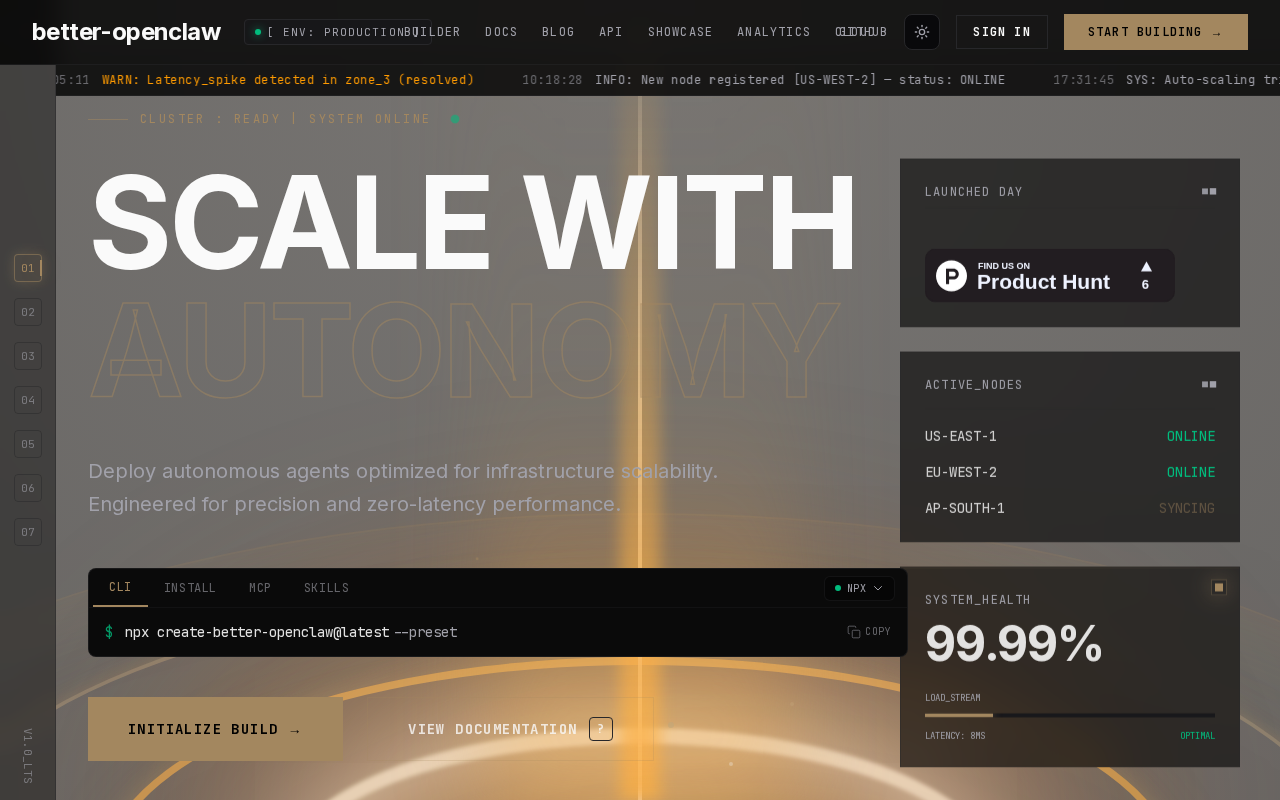
better-openclaw bootstraps a production-ready OpenClaw stack via a single npx command — bundling 58+ services and 10 skill packs with Docker Compose, self-hosted and data-sovereign.
About
better-openclaw is a stack generation and deployment tool that bootstraps a production-ready OpenClaw environment via a single npx command. Rather than manually wiring together individual services, it generates a Docker Compose configuration bundling 58+ companion services and 10 skill packs, guided by a configuration process that captures the specific setup requirements. The self-hosted architecture prioritises data control and avoids vendor dependency — everything runs on infrastructure the operator owns. An optional cloud deployment path through Clawexa Cloud is available for those who want the stack composition benefits without managing the underlying infrastructure themselves. The tool targets developers and teams who want the power of a comprehensive stack without the assembly effort.
Developers and technical teams who want a comprehensive, self-hosted OpenClaw stack with full data control — particularly those who have outgrown simple single-service deployments and need a structured way to manage a multi-service agent environment without building the stack composition from scratch.
Pros & Cons
Pros
- check Single npx command bootstraps a complete production stack — eliminates hours of manual service wiring
- check 58+ pre-configured services and 10 skill packs bundled out of the box is exceptional breadth for a stack tool
- check Self-hosted Docker Compose architecture keeps data fully within operator-controlled infrastructure
- check Optional Clawexa Cloud path provides a managed alternative without abandoning the stack composition model
- check Git-based deployment enables version control of the full stack configuration
Cons
- close Requires Docker and Docker Compose familiarity — the complexity is reduced but not eliminated for less technical operators
- close 58+ services is a lot to manage in production; monitoring, updates, and troubleshooting complexity scales with service count
- close Self-hosted model means infrastructure maintenance, security patching, and uptime responsibility falls on the operator
More Hosting
Other tools in the same category.